


Minerva's finance team spent every month cleaning billing data in Excel
Minerva
Fintech
Mid-Market
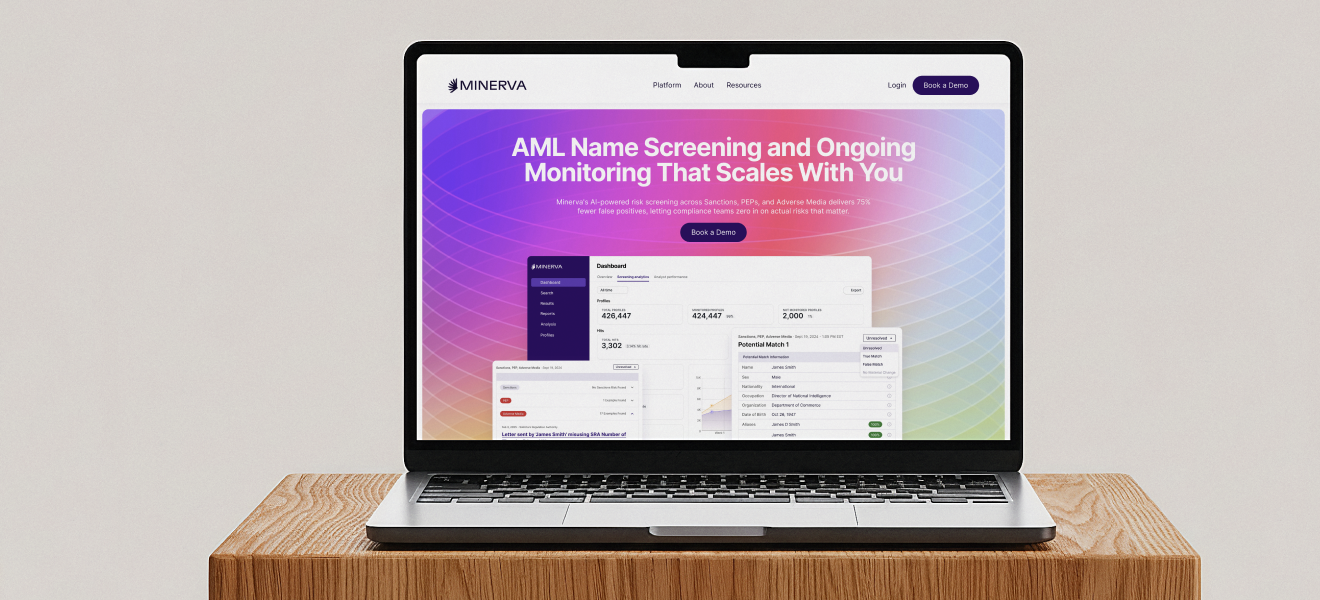
Minerva builds AI-native infrastructure for financial institutions to detect and prevent money laundering. Their platform adapts to different risk profiles, moving customers between compliance levels based on what their teams need.

Minerva's finance team had a monthly ritual. Export usage data from Tableau. Open Excel. Check for duplicate transactions. Cross-reference against contract terms. Fix mismatches by hand. Open QuickBooks. Create invoices. Hope nothing was wrong.
The process worked when they had a handful of customers. It didn't scale. Their AML product billed based on transaction type: enhanced due diligence checks, suspicious pattern alerts, different compliance workflows with different pricing. Some customers had minimum commitments. Others had tiered pricing that changed based on volume. Every contract was slightly different.
The cracks started showing as usage grew. A customer would hit their minimum halfway through the month, triggering overage billing. The finance team wouldn't know until they ran the export at month-end. An institution would move a batch of transactions from basic screening to enhanced due diligence. The billing logic would need manual adjustment. Someone would catch a duplicate transaction during the Excel cleanup. Or they wouldn't, and the invoice would go out wrong.
Renee Tung, Minerva's Head of Finance, was spending more time checking for errors than actually collecting revenue.
What Measure automated
Minerva connected their Tableau usage data directly to Measure. Usage flows in, Measure matches it to the correct billing logic based on each customer's contract. Transaction type billing, tiered pricing, minimum commitments: all handled automatically.
For quotes, Measure's CPQ lets Minerva's sales and finance teams configure pricing, apply discounts, and generate contracts in one system. No more spreadsheet quotes that don't match what gets invoiced later. When the contract is signed, the billing logic is already set up. When usage comes in, invoices generate automatically and sync to QuickBooks. No export, no Excel cleanup, no manual reconciliation.
The Measure team ran the implementation through a shared Slack channel. Hands-on support, expert guidance on simplifying billing complexity while keeping flexibility for custom contracts. Flat-fee engagement, not a percentage of revenue.
What changed
The finance team got 80% of their time back. The hours spent on Tableau exports, Excel checks, QuickBooks data entry, and error fixing? Gone. The billing discrepancies between systems that used to require investigation? Eliminated. Cash collection improved because invoices went out faster and more accurately.
The sales team could quote complex deals with confidence. Custom minimums, tiered pricing, multi-product contracts: all quotable through CPQ instead of asking finance to build a custom spreadsheet. Deal velocity increased.
Renee's team doesn't miss the monthly export ritual. They're working on strategic initiatives instead of checking for duplicate transactions in Excel. The billing infrastructure scales with the product now, not against it.
See how it works
Book a demo to see how Measure handles your billing. We'll walk through the platform and answer questions about your specific setup.